
- automation
- workflow automation
- AI automation
- business process
What's Actually Worth Automating (And What Isn't)
Not every repetitive task is a good automation candidate. Here's a practical way to tell which manual processes are worth the engineering investment — and which aren't.
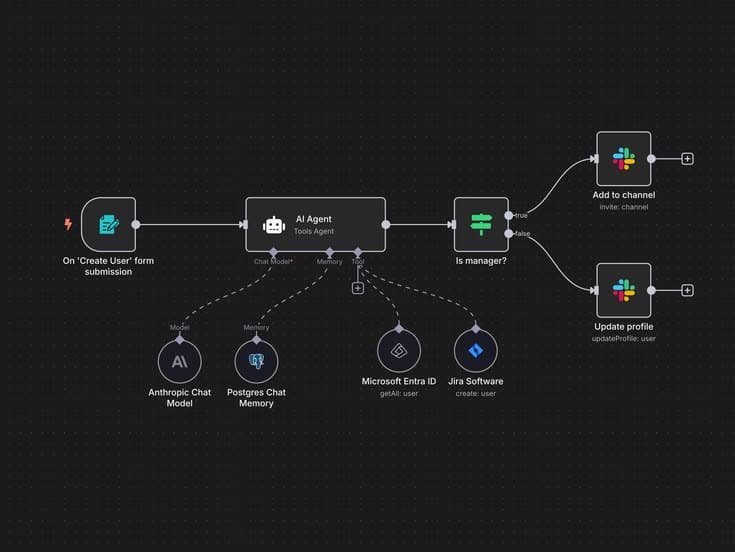
"We should automate this" is one of the most common requests we hear, and it's often right — but not always. Automation has a real cost: it needs to be built, tested, monitored, and maintained, and a poorly chosen automation can end up costing more attention than the manual process it replaced. Before automating anything, it's worth running the task through a short set of questions.
Is it actually repetitive, or just recurring?
A task that happens every week but requires human judgment each time — deciding how to handle an unusual customer request, for instance — is recurring, not repetitive. Automation works best on tasks where the steps are genuinely the same every time, not ones that merely happen on a schedule.
What does a failure actually cost?
Automating a low-stakes task — reformatting a weekly report — is nearly risk-free if it breaks; someone notices and fixes it. Automating a high-stakes task — auto-approving refunds, for instance — needs real error handling, alerting, and a fallback, because a silent failure there costs real money or trust. The build effort should scale with the cost of the automation getting it wrong, not just the frequency of the task.
Where AI genuinely helps
Machine learning earns its place in an automation when the task involves judgment on unstructured input: reading a document and extracting key fields, classifying a support ticket by topic, summarizing a long thread. Where the task is really a fixed set of rules — "if status equals X, send email Y" — a plain rule-based workflow is more reliable, cheaper to run, and far easier to debug than an AI model doing the same job less predictably.
A simple way to prioritize
The best early automation candidates are usually tasks that are: frequent enough to add up (daily or weekly, not once a quarter), low-risk if something goes briefly wrong, and genuinely rule-based rather than judgment-based. Start there, get the monitoring and alerting habits right on something low-stakes, and only then move toward automating the higher-stakes, higher-judgment processes — with proportionally more care built in.